Proposed Tathra Wind Farm
Location: Shire of Carnamah, Mid West Region
Stage: Feasibility
Overview
In line with the State Government’s Energy Transformation Strategy, Synergy is continually looking for opportunities to expand our fleet of renewable generation assets. As part of this, Synergy has assessed the feasibility of a renewable energy development in the Shire of Carnamah, approximately 15km east of Eneabba.
Snapshot
Proposed large-scale renewable energy development including:
Up to 140 wind turbines, up to 1000MW
Up to 500 MW of solar generation
Up to 500 MW of battery storage
Location:
Shire of Carnamah, approximately 15 km east of Eneabba
Northern neighbour of the existing Warradarge Wind Farm
Across a collection of farming properties, minimising the need for clearing
Accessible to transmission
Project Approvals
Following assessment by the Regional Development Assessment Panel, Synergy’s Development Application for the proposed Tathra Wind Farm has received approval. Secondary approvals will follow to allow for construction and subsequently operations.
In response to Synergy’s referral to the Environmental Protection Authority (EPA), the EPA has determined to not assess the proposed wind farm. This outcome was decided by the EPA because the proposed environmental effects of the proposal are not so significant or unmitigated as to warrant formal assessment under Part IV of the Environmental Protection Act 1986 (EP Act), and other regulatory instruments exist to manage the project. Please visit their website for further details on their decision.
Synergy also submitted a referral to the Department of Climate Change, Energy, the Environment and Water (DCCEEW) under the Environment Protection and Biodiversity Conservation Act 1999 (EPBC Act), which was determined to be a 'not controlled action if undertaken in a particular manner'. This means the project does not require further assessment or approval under the EPBC Act, provided it is undertaken in accordance with the environmental measures and commitments outlined in the referral. For more information, visit the National EPBC Public Portal website.
Why wind, solar and battery?
Throughout the feasibility assessments, the opportunity to include wind, solar, and battery assets within the proposed development envelope was explored and identified as a highly advantageous option.
The Mid West is one of Australia’s most favourable regions for renewable energy. It offers:
Strong, consistent wind—especially in the afternoon and evening
Exceptional solar resources, with peak generation during the middle of the day
Ideal conditions for battery storage, which enhances the performance and reliability of both wind and solar power.
These three technologies naturally complement each other. By co-locating wind turbines, solar panels, and a Battery Energy Storage System (BESS) on the same site, the project can:
Reduce environmental impact and lower costs by sharing infrastructure such as substations, access roads, and grid connections.
Balance energy output by smoothing fluctuations in generation and ensuring a more stable flow of electricity to the grid.
Store surplus energy during periods of high generation and low demand, then release it during peak demand times—such as in the early evening when solar generation drops but electricity use remains high.
Prevent grid overload by absorbing excess energy that might otherwise be curtailed, helping to maintain grid stability and avoid unnecessary waste.
Support a more resilient energy system by providing fast-response backup power and helping to manage voltage and frequency on the network.
This integrated approach not only supports Western Australia’s renewable energy goals but also delivers a more flexible, efficient, and reliable electricity supply for the future.
Visual impact
A landscape and visual impact assessment (LVIA) was conducted to assess the visual impact of the proposed project at key locations.
Viewpoint from Rose Thomson Road
Viewpoint from White Gums Nature Reserve
Viewpoint from Carnamah- Eneabba Road
Viewpoint from Reserve Road
-
Project Exploration ✓
Identifying and investigating an area’s potential for energy generation through desktop research and early engagement with landowners.
Studies and Approvals ✓
Conducting detailed studies to determine the technical, social and commercial viability of a project. This includes engaging with the community, measuring the resource, conducting surveys and obtaining relevant approvals.
Financial Feasibility •
Engaging suppliers to procure services and equipment. Exploring funding opportunities and progressing grid connection process.
Construction
Preparing the site and constructing the project infrastructure.
Operations
Operating and maintaining the facility and associated infrastructure to generate energy.
End of Life
Extending the life of the facility, rebuilding it with newer technology, or closing and restoring the site. Where possible, materials are recycled, re-used or repurposed.
-
-
Map - proposed layout
Video
Contact us
Community Team — Grace
0455 338 299 | community@synergy.net.au
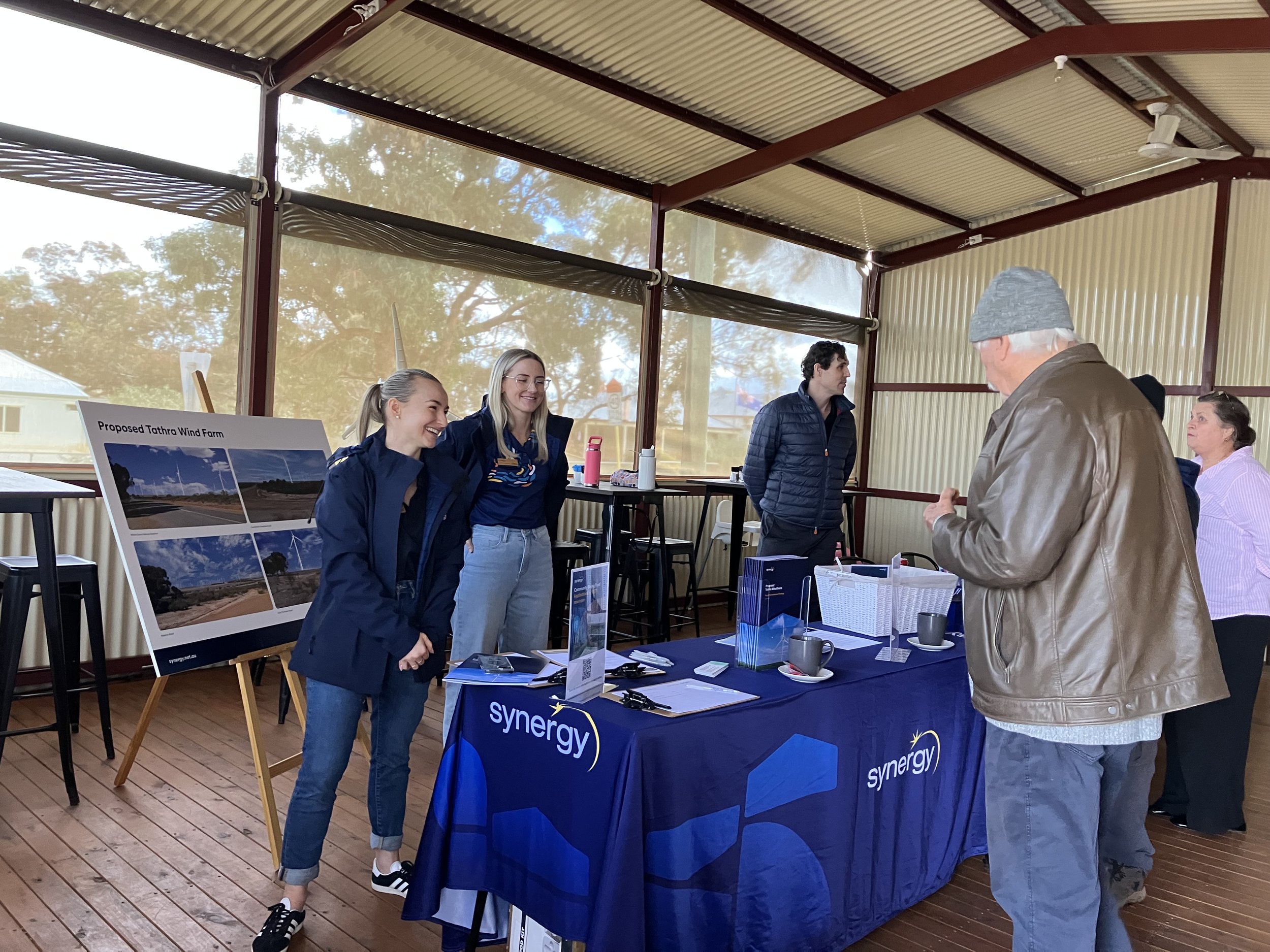
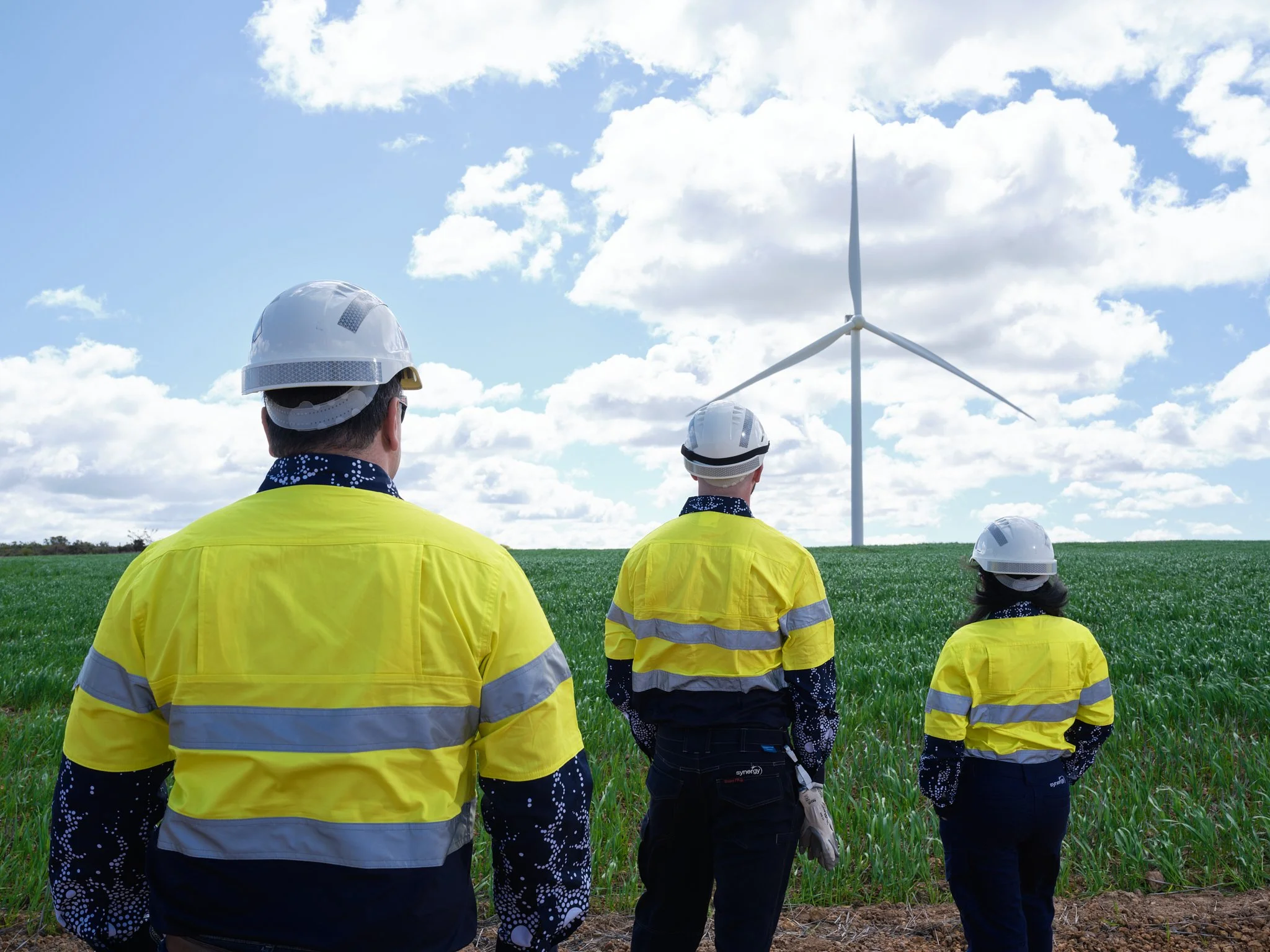
The SynergyRED team in the community
-
![]()
Community consultation in Coorow
-
![]()
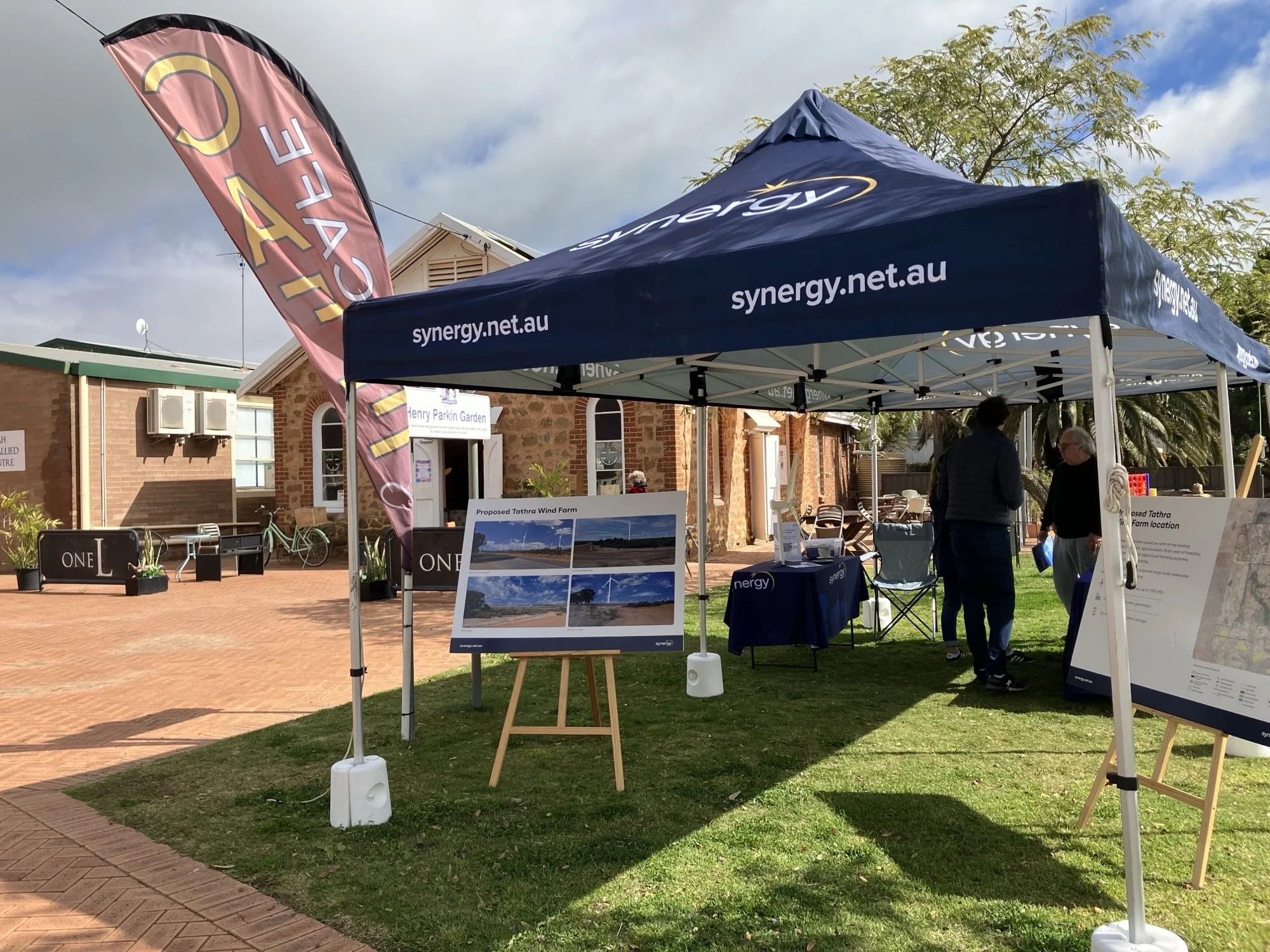
Community consultation in Carnamah
-
![]()
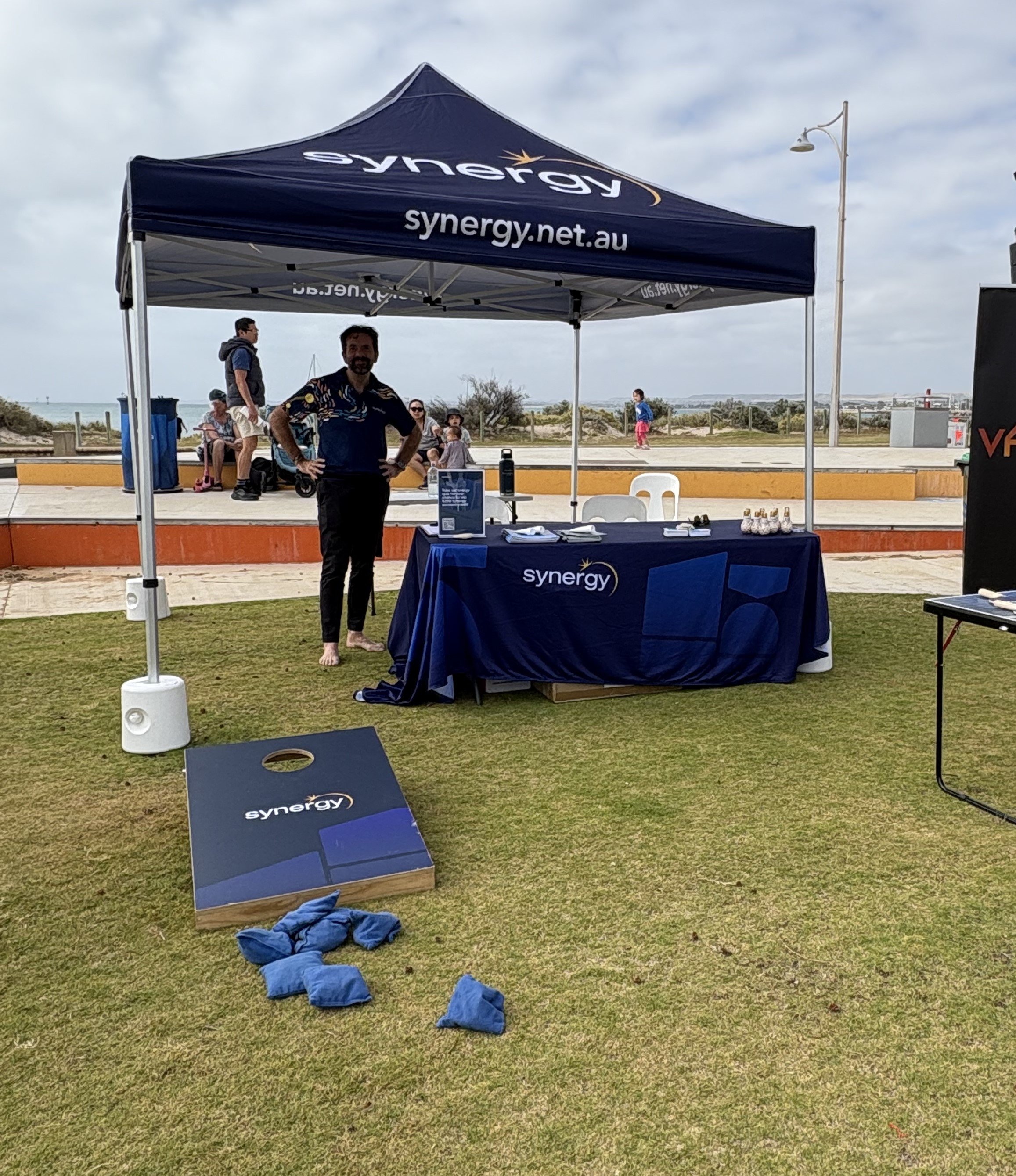
Lawn games at Yamatji Southern Regional Corporation's NAIDOC event in Geraldton